

The Other Half of the Conversation
On going solo, a particular way of thinking & building an AI workaround ・ As It Turns Out


Welcome to As It Turns Out, occasional field notes on the constant experiments I’m running in the background. Sometimes I move too fast and break things I shouldn’t, and sometimes I discover a really cool idea that’s worth sharing. If it don’t break, I’ll try not to fix it?
Working from home, starting a business, making your own decisions… There’s a lot to love about it. It can feel a bit lonely, but that’s not quite the word for what’s missing.
In a previous life, I worked with a team. A real one, not just people who showed up and did tasks, but persons who each brought something the others didn’t have. I’m a 4 on the Enneagram. Another teammate was a 2, and another a 6. Between the three of us, we built a team and rhythms that worked, and being intentional about the gaps was part of why it worked. When we added new people, different tools, changed processes, we looked at what we were missing and tried to solve for that.
The 6 on the team kept us honest. She could read the undercurrents of the larger organization: who was nervous about what, where a proposal would snag, how to introduce ideas in a way that would actually land. And she was relentless about asking the question I didn’t always want to hear: Love the vision. But if you do X, Y and Z are going to happen. Are you ready for that, and what’s your plan?1
Sometimes I was like, “Why you harshin’ my flow?” But if you’re going to build a team to cover your gaps, you have to be willing to listen when those gaps get called out.
Now, I’m on my own. Which I chose: the freedom, the clear vision, the work that’s fully mine. And I love that. On the one hand, I own all of it. On the other hand, I own all of it.
The thinking. The ideation. The execution. The planning. The reading of the room when there’s no room to read and no one else in it. It’s all mine, baby.
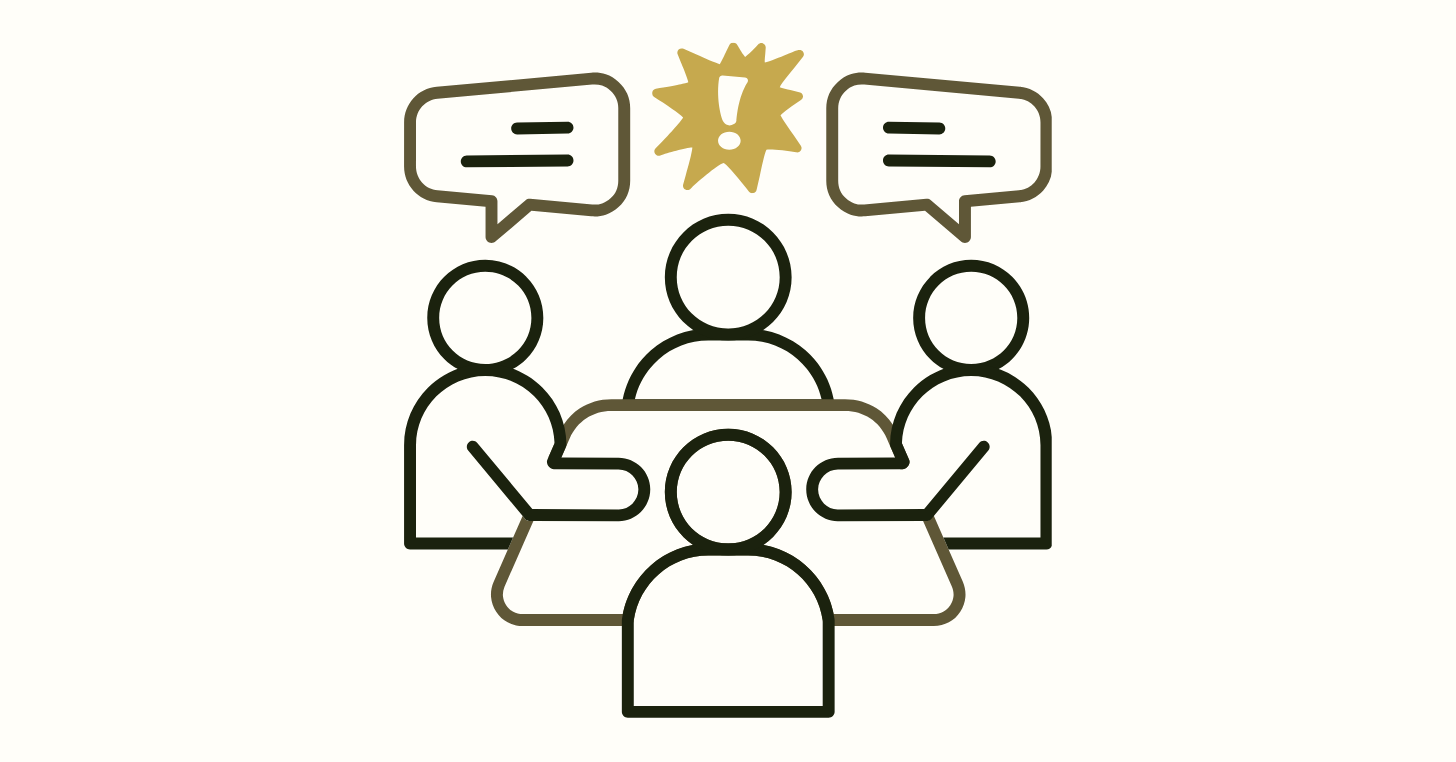
I noticed the gap more recently when I came across the concept of an “AI boardroom,” an LLM prompt to trigger a set of AI personas that stress-test decisions, give different perspectives, and push back. What resonated for me wasn’t so much the novelty of the tool or the specific personas. Rather, it was the principle beneath. I already had clarity about my direction. What I didn’t have was coverage: the angles I can’t see from inside my own head. The questions I don’t think or want to ask.
The idea that seemed so brilliant at 3am launches to crickets three months later. The sunk costs of building a tool that appeared to solve all the problems only to create a headache when it breaks down and the bug can’t be traced. The service offer that flattens like a whoopee cushion when presented to a business coach, who gives you hard but necessary feedback.2 When four out of your five strengths on the Clifton StrengthsFinder all fall with in the strategic quadrant alone, these are the kinds of pitfalls you encounter.3
So I took this idea of the boardroom and built something a little smaller and more focused: I distilled the idea of eight personas into four lenses, each designed to surface what I haven’t examined (not to tell me what to think). It’s a rough substitute for my former co-worker’s stress-testing instinct, but it nudges me toward the tactical and operational consequences I might miss because I was too close to the idea.
There’s a lot of to’ing and fro’ing about whether AI is good or bad these days. I understand it; I do. But it’s also a frustrating conversation, because the tool doesn’t remove the need for us to bring ourselves to it. As Limited Edition Jonathan put it: “If the responsibility for bad AI output belongs to you, then the credit for good AI output also belongs to you. Think about that for a second.”4
The panel doesn’t make the decision for me. But it does help me to have the other half of a conversation I need, and can’t have alone. In the end, I still have to choose what to do and how to act on those choices.

The panel also doesn’t replace the ambient presence of other people working, what’s known as body-doubling. There’s sometimes just something about the low-grade pull of a shared environment: everyone’s at their desks, so you’re also at yours. That’s a different gap, and the panel can’t close it.
It also doesn’t replace the lived experience of knowing an organization’s history and dynamics. The relational intelligence, the reading of undercurrents, the sense of how something will land in a group: that requires people, not prompts. It requires someone who knows your whole situation, remembers what you said last month, and will ask the question you’ve been crossing your fingers no one asks.
The AI panel is a workaround for me right now, a way to generate the other of half of a conversation I’m always having with myself, especially when I’m not doing the best job at it. But I’ve learned something from needing it: what I miss isn’t just company. It’s a particular kind of thinking that only happens between people with different perspectives and skills: the colleague who reads what’s underneath, the friend who catches what you’ve stopped seeing.
You can build for that when you have the people. You can approximate it, imperfectly, when you don’t. I think the approximation is worth building, not because it solves the problem, but because the alternative is making decisions alone at 10pm and finding out six weeks later where you went horribly wrong.
Let’s be hopeful, creative, and wise—together.
Shalom,
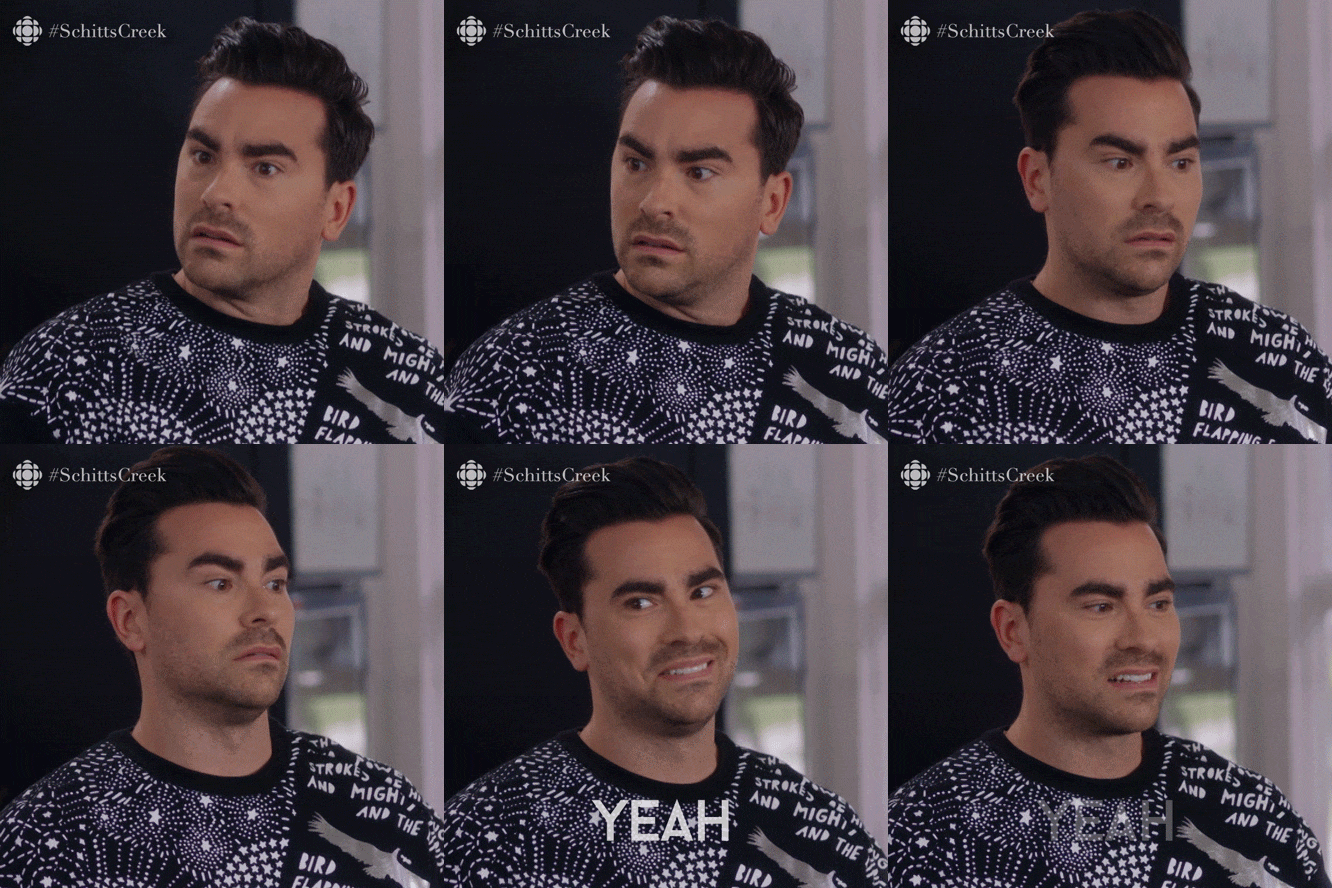
That was a real person and a real conversation, which is why getting out of our heads does wonders.
If you were to set me on a seesaw representing the spectrum of those four quadrants, one end would thunk into the ground with the force of a jackhammer. I have gaps, people.