

Dr. J. Dwight Pentecost & the Power of Destroying Your Notes
Character References • People Watching

People Watching explores what it looks like to be a flourishing human through the relationships that shape us. I share conversations from real folks about the role models they’ve found in their everyday lives, and “character references” from historical, fictional, and contemporary folks who shed light on what it looks like to live with purpose in any age.
Use this worksheet to take notes!

As I was learning to let go of my elaborate systems and trust that I already knew what I needed to know, I kept thinking about Dr. J. Dwight Pentecost’s practice of destroying his notes.
In a previous era, I attended Dallas Theological Seminary. I spent three difficult, formative years there, but it was only after I left DTS that I learned more about Dr. J. Dwight Pentecost (a.k.a., Dr. P), professor, scholar, and theologian.1 I’ve been sorry ever since that I never had the pleasure of learning directly from him.
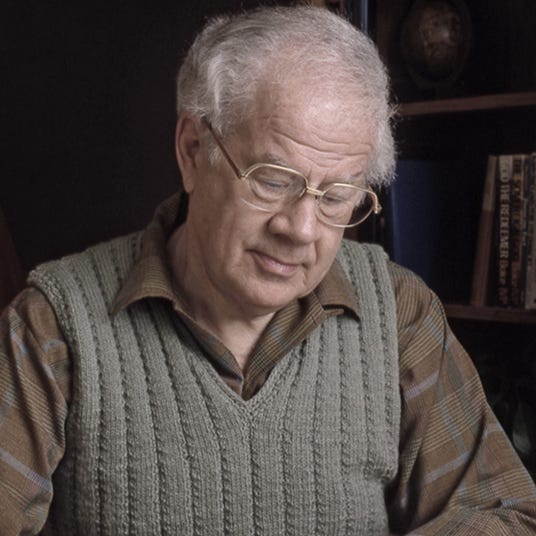
After he passed away in 2014, I learned about Dr. P’s “legendary practice of teaching without notes.” I’m familiar with the idea of preaching without notes, but Dr. P’s practice was a bit different: he would rest his open Bible on the lectern, and walk through the text in real time with his students. At some point in his life and ministry, he stopped marking or making notes in his Bible, and he destroyed his notes after each sermon he gave.
His reason?
To avoid being drawn back to the same insights and prevented from receiving new ones.

This has stayed with me ever since. While Dr. P could certainly claim a level of proficiency in his subject matter, I’m struck by his humility in assuming that he always had something new to learn, even after fifty-plus years. I’m also realizing that his practice of teaching without notes reflects his trust in his skillset and capacity to engage, reflect on, and learn from the text, his experience, and his relationships with others.
As I reflect on my personal evolution this year, I realized that, in hoarding all the highlights and perfecting my workflows, I actually was keeping myself focused on who I was, instead of who I wanted to become. It isn’t that what I learned before was bad or wrong—it’s just that who I’m becoming needs to learn different things. And I need to learn how to trust that I can indeed learn those new things.
Who models this kind of self-trust for you?
Let’s be hopeful, creative, and wise—together.
Shalom,
You can read more about Dr. J. Dwight Pentecost here: An Enduring Ministry: The Life and Times of J. Dwight Pentecost - DTS Voice