Hildegard of Bingen + Princess Shuri: Living with Multi-Passionate Purpose
Character References • November 2025


People Watching explores what it looks like to be a flourishing human through the relationships that shape us. I share conversations from real folks about the role models they’ve found in their everyday lives, and “character references” from historical, fictional, and contemporary folks who shed light on what it looks like to live with purpose in any age.
Use this worksheet to take notes!

A key facet of philosopher Simone Weil’s work is the idea of rootedness, of belonging to a place and a time in such a way as to be connected to one’s past and future, not just one’s now. In The Need for Roots, she writes that rootedness involves
“real, active, and natural participation in the life of a community which preserves in living shape certain particular treasures of the past and certain particular expectations for the future.”
Weil’s concept of rootedness brings out what embodied meaning, purpose, and significance looks like—how we relate to our past, future, and present. Living with rootedness in such a way serves as a constraint on what we see, want, choose, and do, showing us how such constraints serve either as a limit or as an invitation.
Today’s Character References model for us what it looks like to be rooted in a place, time, and purpose.

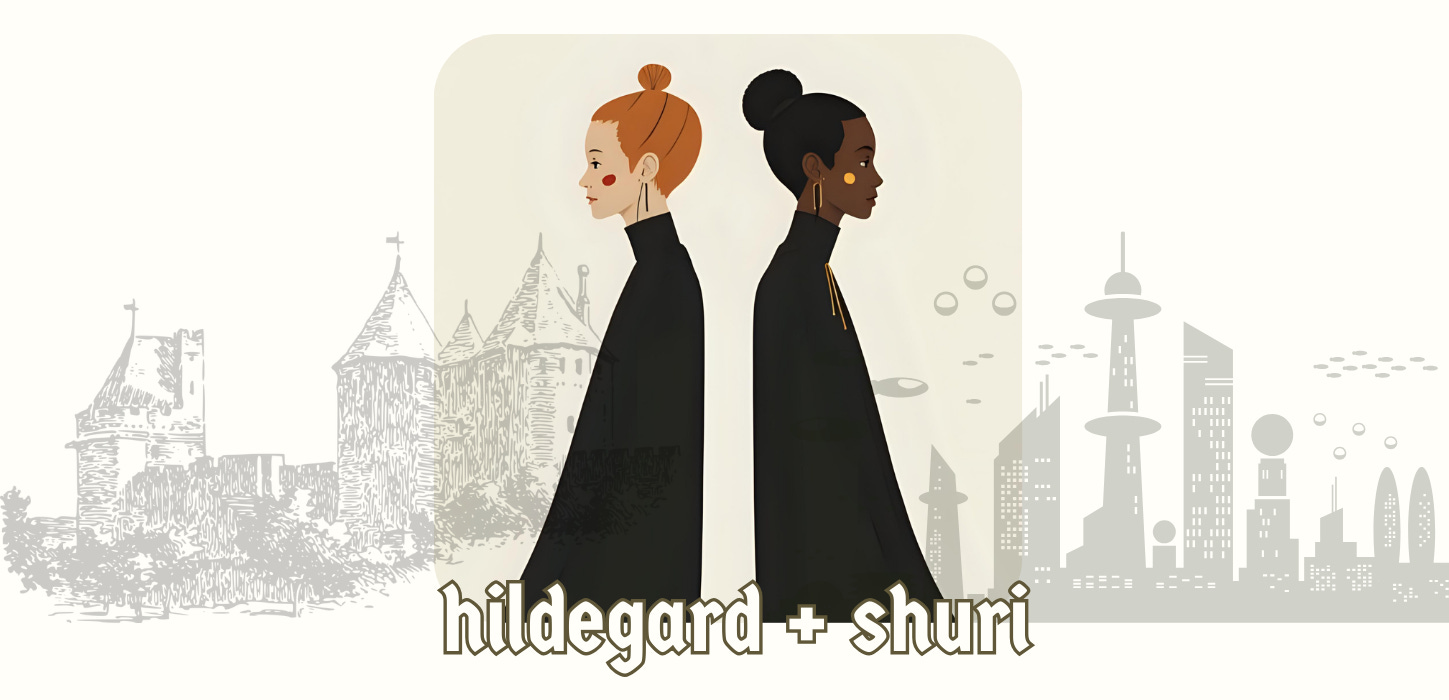
At first glance, a 12th-century Benedictine abbess and a fictional 21st-century Wakandan princess might seem to have little in common. But Hildegard of Bingen and Princess Shuri demonstrate a remarkable pattern: how multi-passionate individuals channel their diverse interests through deep rootedness in identity and community.
Working as a composer, writer, philosopher, and medical practitioner within the enclosed world of her Benedictine abbey, Hildegard led a truly remarkable life. She established foundations of natural medicine and holistic health, composed liturgical music still performed today, wrote theological treatises, and recorded mystical visions—all while managing the complex administrative and pastoral duties of abbess.
Similarly, Shuri seamlessly moves between cutting-edge technology development, combat training, cultural preservation, and royal responsibilities. Her vibranium innovations emerge not from abstract scientific possibility but from deep commitment to Wakandan values and her people’s flourishing.
Both figures reveal how constraints foster rather than limit multi-passionate creativity. Hildegard’s abbey walls didn’t restrict her intellectual pursuits—they provided the stability and resources that allowed her to integrate mystical vision with practical healing, theological insight with musical expression. The structured life of prayer, study, and community created space for her diverse interests to inform and strengthen each other.
Shuri’s innovations are similarly shaped by Wakanda’s constraints: its isolation from the outside world, its commitment to protecting vibranium technology, and its deep cultural traditions. Rather than limiting her creativity, these boundaries focus it. Her technology serves Wakandan values; her scientific pursuits are grounded in ancestral wisdom.
Most significantly, both demonstrate how multi-passionate energy becomes most powerful when rooted in clear identity and purpose. Hildegard’s diverse work emerged from her fundamental identity as a mystic called to serve God’s people through healing, teaching, and worship. Her medical knowledge served her pastoral calling; her musical gifts enhanced liturgical life; her administrative skills created space for contemplative practice.
Shuri’s technological innovations flow from her identity as a Wakandan princess committed to her people’s protection and flourishing. Her scientific brilliance serves her cultural values; her combat skills protect her innovations; her royal responsibilities ground her work in community needs rather than abstract possibility.
The pattern both women establish challenges our contemporary assumptions about focus and productivity. Both refuse the false choice between depth and breadth, instead showing how diverse interests can serve unified purpose when grounded in clear identity. Neither scattered their energy across disconnected pursuits nor artificially narrowed their focus to single specializations.
For the multi-passionate person, Hildegard and Shuri suggest that the solution isn’t elimination but integration—allowing our various interests to become conversation partners in discovering and living into purpose. Their lives demonstrate that when our diverse passions emerge from and serve our fundamental identity and community commitments, they become complementary expressions of who we’re designed to become rather than competing distractions from it.
Whether working within abbey walls or the advanced laboratories of Wakanda, both figures show us that multi-passionate life finds its greatest power not through endless expansion but through deep rootedness—letting our various interests serve the formation of who we are designed to be as we live purpose-focused lives.
Let’s be hopeful, creative, and wise—together.
Shalom,